
Fanglin KnittingCustomized high-end clothing knitted sweater
Fanglin KnittingCustomized high-end clothing knitted sweater
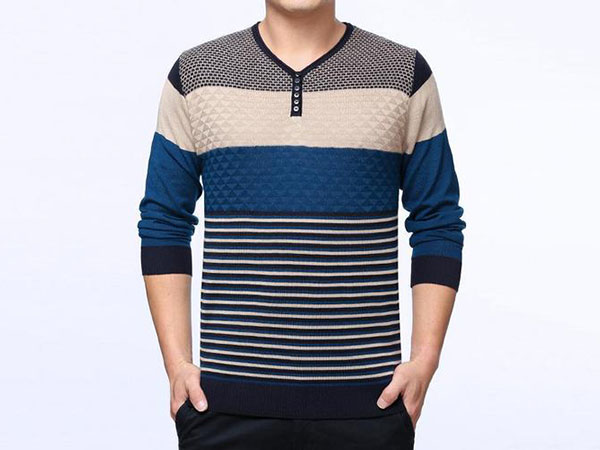
In the current era where fashion and quality are equally valued, mid-to-high-end sweaters, with their soft touch, exquisite craftsmanship and unique design, have become the darlings of many consumers' wardrobes. So, how exactly does a mid-to-high-end sweater transform from a raw material into a fashionable item? Let's step into the processing procedures behind it together.
The journey of mid-to-high-end sweaters begins with the selection of high-quality raw materials. Natural fibers such as wool and cashmere are the first choice for making this type of sweater. High-quality wool fibers are long and fine, with high curling degree, and possess excellent elasticity and warmth retention. Cashmere is renowned for its softness, fineness, lightness and warmth retention, and is hailed as "soft gold". Manufacturers will carefully select raw materials that meet standards to ensure that sweaters have a high-quality foundation from the very beginning.
After the raw materials are selected, the spinning process begins. Spinning is the process of transforming fibers into yarn, and this step plays a crucial role in the quality of sweaters. In modern spinning factories, advanced equipment carves, draws and twists fibers to make them into yarns of uniform thickness and appropriate strength. The yarn used in mid-to-high-end sweaters is usually finer. During the spinning process, various parameters are strictly controlled to ensure the quality of the yarn. For instance, by using a special spinning process to make the surface of the yarn smoother and reduce fuzz, the sweaters woven in this way not only look more beautiful but also are more comfortable to wear.
Weaving is a key step in the shaping of sweaters. According to the design requirements, workers weave the yarn into various parts of the sweater through a flat knitting machine or a computerized flat knitting machine. In the weaving process of mid-to-high-end sweaters, attention is paid to the application of stitches and the control of density. Different stitching techniques can create a rich variety of textures and patterns, making sweaters more fashionable and artistic. Reasonable density control can ensure the thickness and elasticity of the sweater, making it both warm and in line with the body's curves. Meanwhile, the application of computerized flat knitting machines has significantly enhanced the precision and efficiency of weaving, enabling precise realization of complex design patterns.
After weaving is completed, the sweater still needs to go through a series of post-treatment processes. The first step is the flocking treatment. Through a specific process, the fibers on the surface of the sweater are made to entangle and contract with each other, increasing the thickness and warmth retention of the sweater, while making its surface softer and smoother. Next comes the dyeing process. Mid-to-high-end sweaters usually use environmentally friendly and high-quality dyes to ensure bright, long-lasting colors that are harmless to the human body. During the dyeing process, parameters such as temperature, time and dye concentration are strictly controlled to ensure the uniformity and saturation of the color. After dyeing is completed, a shaping treatment is also required to fix the shape of the sweater and prevent it from deforming easily.
Finally, only after going through a strict quality inspection process can a mid-to-high-end sweater be officially completed. Quality inspection personnel will conduct a comprehensive inspection of the appearance, size, quality and other aspects of the sweaters to ensure that each sweater meets the high-quality standards. Only sweaters that pass quality inspection will be labeled with brand tags, enter the market and be presented to consumers.
The processing procedures of mid-to-high-end sweaters are complex and meticulous, with every step embodying the hard work and wisdom of the artisans. It is precisely these rigorous craftsmanship and exquisite techniques that have created the outstanding quality and unique charm of mid-to-high-end sweaters.
 Tel+86 137-1187-6288
 ContactManager Zhang
 AddNo. 729, Songfo Road, Dalang Town, Dongguan City, Guangdong Province
 WeChat consultationMobile site