
Fanglin KnittingCustomized high-end clothing knitted sweater
Fanglin KnittingCustomized high-end clothing knitted sweater
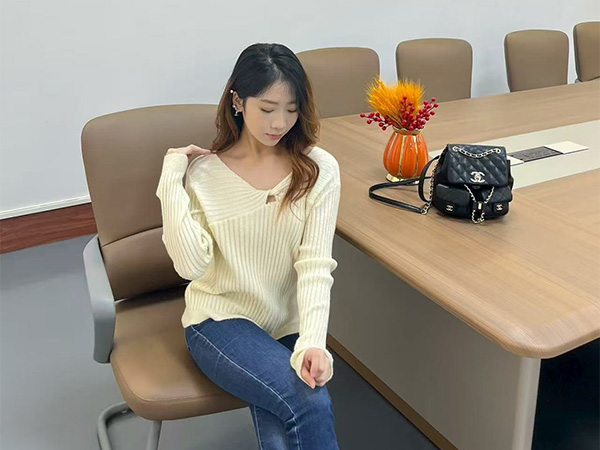
Woolen fabrics are textiles made from animal hair fibers such as wool and cashmere or wool-like chemical fibers through processes like spinning and weaving. They are mainly classified into three types: fine-spun woolen fabrics, coarse-spun woolen fabrics, and plush fabrics [1-3]. Fine-spun woolen fabric is woven from combed wool yarns. Representative varieties include gabardine and Valentin, etc. Coarse-spun woolen fabric, after shrinking treatment, presents a pile coverage. Typical products include Melden and flannel. Long-pile fleece has a standing pile structure, with sea tiger fleece being the most common category. Woolen fabrics generally have good warmth retention and excellent elasticity, but they are prone to shrinkage and insect damage.
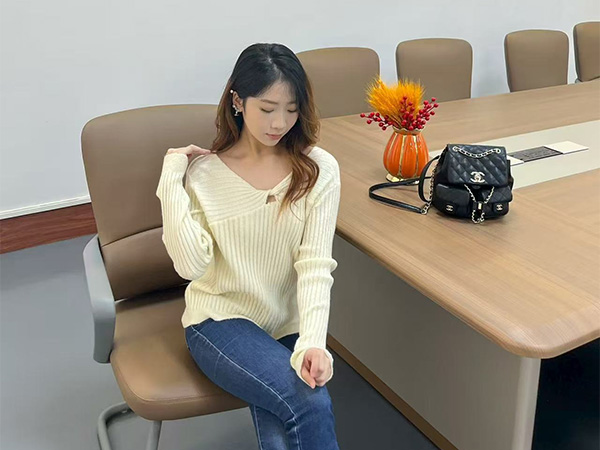
The Chinese wool textile industry chain covers multiple categories such as wool strips, fabrics, and blankets. The industry is characterized by being technology-intensive, capital-intensive, and labor-intensive [4]. In 2020, the output of woolen fabrics dropped by 41.3% year-on-year, and the export volume declined by 47.4%. In 2023, the export value of woolen raw materials and products was 11.2 billion US dollars, a year-on-year decrease of 1% [3] [6]. From January to April 2025, the output of woolen fabrics decreased by 24.9% year-on-year [5] [7]. The industry is under pressure from rising raw material costs and international trade barriers. At the same time, it is promoting technological innovation, applying new spinning technologies such as compact spinning and compact spinning, and developing functional products like anti-shrinkage finishing and microcapsule aromatic finishing [8] [10-11]. Lenzing Group's Tencel ™ Lyocell A100 fiber improves the strength and toughness of wool yarn through cross-linking technology, while the Ring Fiber ™ reduces production energy consumption by 50%
 Tel+86 137-1187-6288
 ContactManager Zhang
 AddNo. 729, Songfo Road, Dalang Town, Dongguan City, Guangdong Province
 WeChat consultationMobile site